
The 4th Comic Con in Thessaloniki started yesterday with Frank Miller as the guest of honour. I am happy to share with you some of the photos of the first day of the convention.

The 4th Comic Con in Thessaloniki started yesterday with Frank Miller as the guest of honour. I am happy to share with you some of the photos of the first day of the convention.

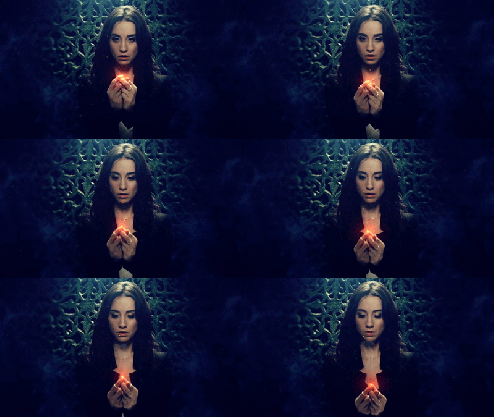
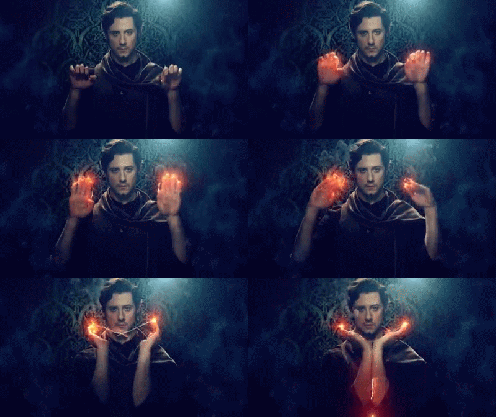
Quentin Coldwater: So “be a magician”? Is that illegal or are you guys trying to take over the world or…?
Dean Fogg: This school exists for a single and timeless purpose – to reveal your innate abilities and hone them to the highest degree. Now, what you do with it after that is entirely up to you. If you want to take over the world, we don’t teach that, but give it a go.
The Magicians, “Unauthorized Magic”, SYFY (2015)
Hello, once again dear readers of the ComicBook Imperative. It has been a long time since we last interacted. I hope that this new blog post finds everyone good! In this long period of time that I didn’t post anything new to the blog, I had the chance to read and watch a lot of amazing stories that I wanted to share with you. I am sure that most of you are familiar with them, but still I hope that you’ll find my take on these stories interesting. So, as for my comeback story I chose Syfy’s “The Magicians”, based on Lev Grossman’s really successful book trilogy.
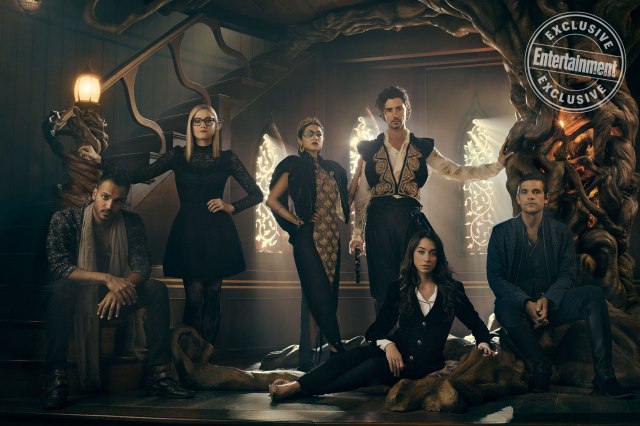
The Magicians, Syfy. From left to right: Penny, Alice, Margo, Eliot, Julia, Quentin.
For starters, the basic premise of “The Magicians” is about the story of Quentin Coldwater who finds himself in an elite magic school, Brakebills University for Magical Pedagogy, where he will be trained as a magician. There he discovers that the fictional world of Filory, from his favorite childhood books, is not fictional, but real and more dangerous than he could ever imagine. At Brakebills, Quentin meets a group of people that will make him challenge everything that he thought was true both about himself and his world. Meanwhile, Quentin’s childhood friend and unrequited love interest, Julia, is denied entry to Brakebills and she decides to search for magic in all the wrong places. Lastly, there is something lurking in the shadows between the worlds, a Beast, and everyone’s time is running out.
This is just the beginning of the wild story of “The Magicians”. In three books and three seasons (a fourth one is coming next year) “The Magicians” explored the spaces the heroes inhabited, but more than that it delved fully and deeply into the characters themselves. Both the books and the TV show were able to address and, to a certain extent, change the rules of what is usually expected from a story that heavily leans on the classic coming off age storyline embedded with fantasy, magic and quests. Lev Grossman, the author of the book trilogy, and Sera Gamble and John McNamara, the creators of the TV series, boldly scrapped the rulebook of the fantasy genre (that is dominated by figures like J. K. Rowling, J. R. R. Tolkien, and C. S. Lewis) giving us a cold, hard look of the reality and perplexity of a world that magic exists. This world is not just beautiful and enchanting and thrilling and full of adventures, but it is also dark and random and mundane and maybe, just maybe, is rooted in the immense pain of the people that live inside it. But the problematic aspect of this world does not lie just in the specifics of magic, but also in the character themselves. We meet the characters at a time when they feel as lost as anyone would feel in their 20s. All of them are charismatic and smart, but that doesn’t change the fact that they have absolutely no idea what to do with their lives. They, also, struggle with their studies, their career prospects, their sex lives, with alcohol, drugs or mental illness. These are all issues that everyone has to face at some point or another. Hence, why all these characters are really relatable. In addition to all these, Quentin and his friends have to find a way to include magic in the already challenging process of growing up. Figuring how everything works out can be a deeply scaring procedure, but it is one that most people experience.
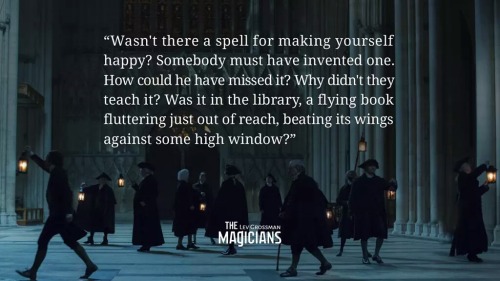
The Magicians, Lev Grossman
The feeling of being lost is accentuated in the world of “The Magicians” due to the lack of villains or wise old men and women that will guide the brave protagonist in order to fulfill a prophesied destiny. The world that “The Magicians” inhabit feels real, because it is really a reflection of the world we live in. In our world, as we get to grow up and, hopefully grow wiser, we get to realize that there are no real villains in our lives and, most likely, no authority, Dumbledore-like, figure to guide our every move so we can stay on path and reach our full potential. We can choose to be good or evil, we can choose the road that leads to comfort or take the path least travelled, but as we get to chose and somewhat “wink it”, the same goes for the ones we seek guidance and advice from. Lev Grossman in his presentation at Google Talks, said: “What if you took away the avuncular adviser figure, which is such a staple of fantasy. You so often have a Gandalf or a Dumbledore or somebody who is there when the main character wonders a little bit off the path or gets confused about what he or she is supposed to be doing, takes them by the shoulders and just says ‘Look, we have this evil ring, it’s a terrible thing and the world is ending, but you see that volcano over there? Just go at the volcano! Put the ring at the volcano and then everything is going to be fine! […] I always felt that there wasn’t nobody in my life in particular who has given me that kind of advice. Or they were, but they were just as full of crap as I was.” And, really, I cannot argue with this assessment. Most of us try to inform our decisions based on what we’ve learned and what we’ve experienced (first-hand or any other way), but at the end of the day we rarely (or ever) get a guiding hand that gives us the opportunity to avoid the big or humiliating mistakes that we will ultimately make. We do not get to have Harry’s assurance that he was walking down the path he was supposed to take from the beginning–and that is probably because there is not a predeterminated path for us to take.
At the same time, Quentin had to face all the hardships of an ever-expanding reality and the terrifying idea that he was not really the chosen one, that he might not be the leading actor in life’s play. The magnificence of “The Magicians” lies in that fact; Quentin may be our way into that world, but as the story progress we get to experience this expanded reality with the addition of more points of view (Julia’s, Alice’s, Eliot’s, Margo’s etc.). Quentin soon realizes that he is not the smartest or the most talented or the chosen one for the adventure he always craved for. His friends become more real and tangible people with just as complex emotions, struggles and desires as Quentin gives them more and more space. And as he is learning that, we get to observe this wider world where not everyone gets what they deserve. A prime example is Julia, who must be one of the most fascinating characters Lev Grossman created (it is interesting to note that behind Grossman’s inspiration for Julia is another Harry Potter character, that of Dudley Dursley). Quentin, by no means, is another Harry or Frodo. And for all of us that grew up in the Harry Potter fever of the late 1990s and 2000s it is easy imagining ourselves as the chosen, the ones above everyone else, the ones that get to have all the excitement and quests. Every other person in our lives could easily get Ron Weasley-ed, being at best a supporting and often one-dimensional character that serves as a mean for us to express our emotions or set our plans in motion (for example, by introducing a villain of the likes of Lord Voldemort or Sauron, the main character finds the necessary driving force in order to embark on the adventure of a lifetime or love interests and friendships sometimes are there just as a way to reflect the feelings of the main character, without much else to offer).
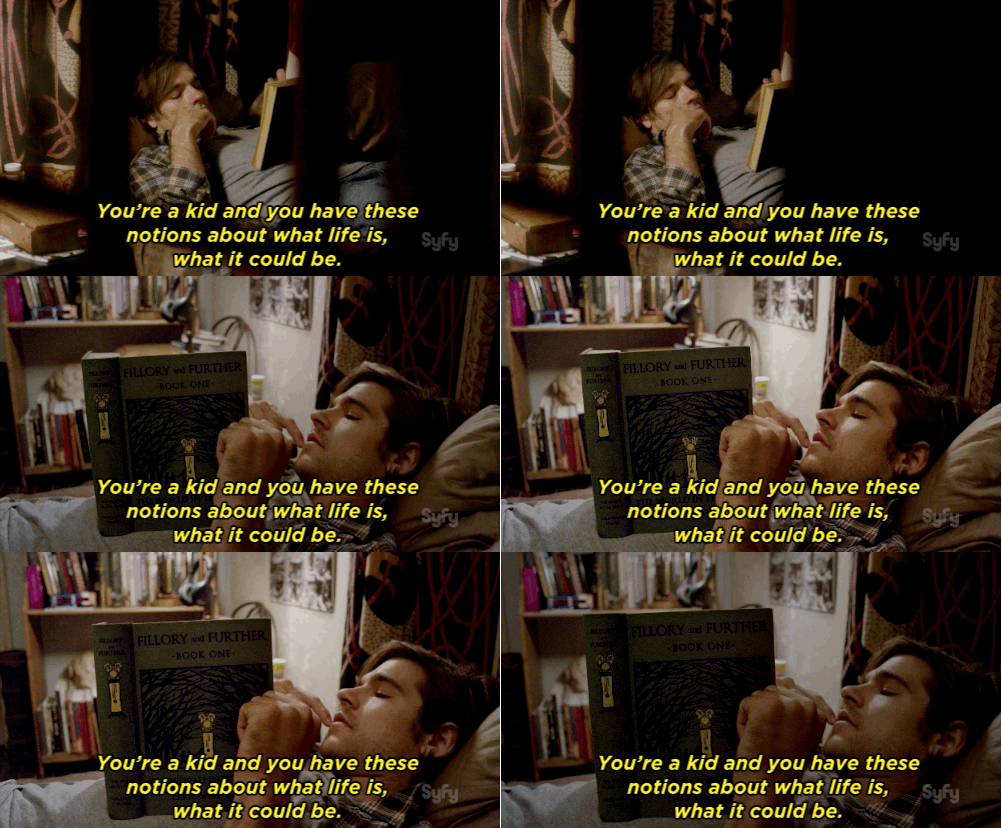
The Magicians, Syfy. Quentin reading Filory and Further.
But as much as any of us identifies with Harry or with Frodo, our lives couldn’t be further away from theirs. Quentin struggles with this idea for a long time. For all of his life he was searching for meaning, something that he couldn’t find in his life before Brakebills, and there he thought he found exactly that. But the disillusionment was not far behind. Quentin’s grapple with mental illness (something that was heavily implied in the books and straightforwardly addressed in the series) caught up with him even in that world he was so passionately wanted to fit in. Even the magical Brakebills couldn’t compete with the allure of Filory, his childhood dream. Quentin cannot “stop looking for the next secret door that is going to lead [him] to [his] real life” and he often has to remind himself to stop waiting. This was his life. There was nothing else. And he had to decide to enjoy it or be miserable wherever he went. Growing up with books like Harry Potter or the Chronicles of Narnia it is easy to imagine that you get to escape from the often mundane everyday life for a world full of magic and wonders. But what Quentin’s story teaches is that even in that magical world everyday life has a way of catching up with you. Magic in the worlds of Brakebills and Filory, however glorious it can be, is also complicated and procedural. It is not just waving your wand, while reciting cool latin phrases. In Grossman’s world, magic was like math and chemistry. You had to know the variables, you had to learn physics and various languages. Magic was organic, a tool, not something completely fantastical. By adopting that perspective, I believe, let Grossman and Gamble and McNamara to make this world more relatable. And, while offered a world to escape to, addressed some serious issues that all of us might get to face at some point or another.
I would love to read what you guys think about “The Magicians”, who are your favourite characters and what are you most excited for the next stories in season 4. As for me, I love Julia, Eliot and Margo! I have to say they are the ones that I am always excited for!
Till the next time,
George
The ComicBook Imperative Guy


Hello dear readers of The ComicBook Imperative. As August slowly comes to an end and we are getting back from our vacations, it is time to pick up new comicbooks and start new literary journeys. Because the thirst for more stories and more journeys to fantastical places will never be quenched. The Last Arrival by Daniel A. Prim is here to do just that, to let us escape in a different and alien world. The Last Arrival is a story about the journey of five aliens in a new and mysterious world.
The first issue of the comicbook introduces to us the basic characters and offers us some really intriguing glimpses for what is going to come next. I have to say that I read The Last Arrival in one sitting. I couldn’t stop reading it. I kept scrolling down till I reached the last place, and-let me tell you-you will want more! The artwork is truly brilliant and the colouring is exquisite. The intense and vibrant colours both in the background and in the characters themselves intensify the element of alien-ess, while the story itself is deeply humane. This very contrast is what makes The Last Arrival work the way it does. Prim was able to deliver on both of his promises: he created a story that was really personal and-at heart-something relatable to everyone, but at the same time he did not sacrifice the sci-fi aspect of his story (something that can easily become a liability when this aspect turns out to be too obscure). The importance of the sketching and colouring cannot be understated, since these two elements gave The Last Arrival the sense of a world like the one you could find in a cinematic experience (i.e., Avatar).
The Last Arrival poses itself as an epic story of leaving your home, creating new ties, finding a new place to live and explore the history of that new home. This story is definitely something familiar for many people around the world. And so far, the rather extensive first issue was able to address the conflicting feelings of uprooting yourself and the dread and excitement that sometimes co-exist while trying to find your new home. All of the characters are dealing with this loss in a different way. The place they called home was no longer available and the new planet does not seem welcoming. It is really interesting see where the story will move towards to. When it comes to the storytelling, Daniel Prim has worked really hard on his idea and it certainly payed off. I do not want to further spoil the first issue by getting into too much details, but I’d tell you that you really need to check it out.
I had the pleasure to talk with the creator of The Last Arrival, Daniel A. Prim the day that his Kickstarter campaign for his comicbook begins. You can support the campaign, here.

The Last Arrival (2017)
How did the story of The Last Arrival came up?
Oh, Jesus we could probably fill up a book with the answer. It has a long history, but I’ll try to keep it short. The original idea came to me about 10 years ago when I was in love with history and comics and I wanted to combine the two, and I made up a story where aliens come down to a deserted planet and they find a bunch of comic books. That idea just tickled my brain the right way so I’ve been working on the story since. But seriously making the comic has just came up a few years ago and by then the story was much-much more than the original idea.
What can you tell the readers of The ComicBook Imperative about The Last Arrival?
The Last Arrival is about five aliens fleeing their home planet because it is on the verge on destruction by an unknown force. They all have conflicting ideas about their mission and their personalities clash a lot but they have to come together to encounter a planet full of questions. The first issue which was just finished focuses on the characters and setting up some of the themes mostly the relationship between fantasy and reality.
The story is really intriguing so far. Have you completed the story (at least in a draft version)? Are these characters going to find what there are looking for?
Yes, it’s all in my head and the second issue has been finished in script form and we’ve just started making concepts for it. It is a complete story with a beginning, middle and end. As for the characters, they’ll all be challenged in some way or another and they will find something. I can’t comment whether it will be good for them or not.
The artwork is truly stunning. The colours are intensifying the alien aspect of the characters, something that I believe is working on behalf of a fuller reading experience. Their world is different enough to be exciting and scary at the same time, while the characters feel more human. What was the process working with Gergely J. Szabo and Szabrina Maharita?
I couldn’t ask for a better team to work with. Gergely truly understands everything in the script, even the more surreal parts and also gives his own twist to it, which makes it amazing. This is his first comic, would you believe that? I was worried about that, but as soon as the first character designs started to roll in, I was bought. He wasn’t the first or second person trying to make The Last Arrival, but he made it his own and now I can’t imagine the characters or the world without his style. As for Szabrina, without her The Last Arrival wouldn’t just be black/white, it would be lifeless. She puts so much effort into the characters which is the heart of the story, so it all works like magic.
Going back to the story itself, I would like for you to tell me how did you choose an Artist, an Engineer, a Historian and Hope to be the core members of this mission. Is there any significance for you?
You forgot the Inventor. Hahaha. They are all different aspects of my personality. In general this is true for every writer’s ever character, but I consciously focused on separating my different personas into individual characters. I studied a lot of Jungian psychology and that has definitely influenced the writing. On the other hand, it makes sense storywise, if you’d like to preserve a whole planet you’d choose a representative from widely different aspects of life.
While reading the story, I thought that there are some really interesting thought-provoking issues: the need to belong, every being’s quest for survival, the use of technology (even though I think future issues will explore this one more), the feeling of loneliness etc… How did you decide to address these issues through your work and what would you say to the people who feel like an alien or lonely or they need to feel like they belong?
This part of the philosophy entered the story when I myself have moved from my country and became an alien in another. It was a very rough start without money without a good knowledge of the language and a lot of curveballs along the way. It was a huge challenge and it was really stressful at the time, but it made me stronger as a person. Loneliness too can make you stronger, you’ll have time to learn more about yourself and that will guide you through life more than anything.
Where do you see The Last Arrival going in the future?
I have the story planned out with a satisfying ending and we will work our hardest to execute that. We want to surprise you, make you laugh, think and feel.
The rest is up to the reader. Hahaha.
And, last but not least, would you give a minor (or major) spoiler for the readers of The ComicBook Imperative?
There will be two stories. One is a big lie, the other is a small lie. The truth is somewhere in between.

The Last Arrival (2017)
I would like to thank Daniel A. Prim for his time for this interview. Readers of the Imperative, support the Kickstarter campaign for The Last Arrival.
Till the next time,
George
The ComicBook Imperative Guy

Dear readers of The ComicBook Imperative, hello! I am really glad to share with all of you some really great news. Fans of The ComicBook Imperative know that a few months ago I had the opportunity to discuss with an amazing writer and independent comicbook creator, Ryan Little, about his latest work, Lonesomes. I know that you loved Lonesomes as much as I did and the Kickstarter campaign was an absolute hit!
Now, Ryan is coming back with his new work, a completely different work in tone, style and feeling. The name of this work is Prometheus and is a new take and a continuation of the original ancient greek myth. Prometheus is an excellent noir/fantasy take on the myth and it expands it in a really interesting way. The premise of Prometheus is about the Titan that stole the fire of knowledge from the Ancient Greek Gods and gave it to the mortals. This is how the ancient Greeks explained the jumpstart of the civilisation with the discovery of fire. Prometheus‘ hubris against the Gods could not go unpunished. Prometheus was brutally punished by the Gods. Little expands the story bringing Prometheus to the 21st century escaping his everlasting prison. He now has to familiarise himself with a new world that he doesn’t know, come face to face with the Gods that held him captive and find out that the fire of knowledge was stolen. He will embark on a great adventure that I know that I want to follow.
Ryan, in this first chapter of the story, was able to successfully use the material of the original myth and build on it in a really interesting way. Pop culture, the ongoing wars and the financial crisis in different parts of the world set an intriguing and fun premise for Prometheus to explore. The tone and the sketching style is truly complementary of the story and I urge you to check it out!
Follow the link for the Kickstarter campaign, here: Prometheus.
Don’t forget to support independent creators!
George
The ComicBook Imperative Guy
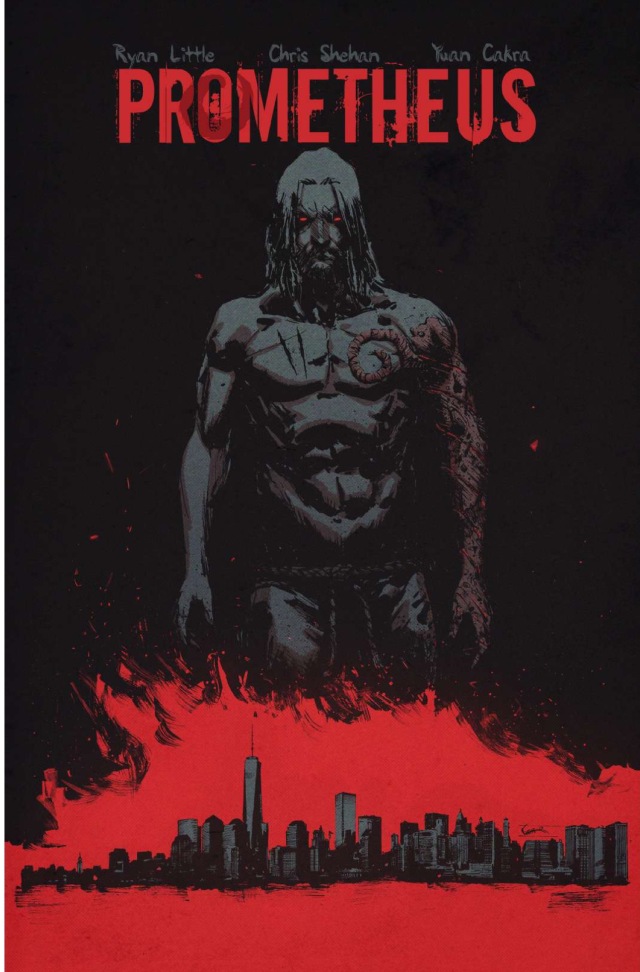
The cover of the 1st issue of Prometheus.

Hello dear readers of The ComicBook Imperative! It has been a great time for anime and video games lovers. Netflix launched the much-awaited series Castlevania. Castlevania is an animated show that is based on the Konami video game franchise with the same name and it revolves around Trevor Belmont who must defend the nation of Wallachia from the evil demons and Dracula himself. Because I do not intend to spoil the fun for all of you that haven’t watched the series yet, my entry will be solely focused on the first episode and the premise that builds the world of Castlevania and it becomes the primary force for the progression of the story.
The story begins at 1455 in Wallachia. The first episode of the series, “Witchbottle”, introduces to the audience a young girl named Lisa who wishes to become a doctor. In order to achieve her deepest desire to help mankind move forward, she seeks and finds Vlad Dracula Tepes in his remote castle. Vlad has advanced scientific and technological knowledge and he becomes amused by Lisa’s straightforward approach and her willingness to risk her life in order to become a doctor. In exchange for his help and guidance, Lisa offers to help Vlad to reconnect with his humanity. Vlad and Lisa’s relationship soon blossoms to something more. 20 years later, Lisa found herself accused of witchcraft and got burned at the stake. Upon her last moments, Lisa cries to Vlad that he should be better than the people that burn her and he should show moral character and help them escape from the mist of ignorance that they live in. Vlad, though, was nowhere near her and never heard her last words. Once he returns to Târgoviște, one of the main cities of Wallachia, and finds out about the fate of his wife, Dracula is devastated and decides to wage a war against every single human being in Wallachia, a war against the Church and the Bishop that ordered his wife to be killed. He emerges from the fires that burned his wife and declares a war that would start a year from that fateful day. Dracula warns the people of Wallachia that they should abandon their land or make peace with their fate if they chose to stay. Another year passes and upon the day of Lisa’s death Dracula keeps his promise and releases hell on earth.
Castlevania is really engaging and a show that urges you to watch more than one episode at a time. The writing is intriguing and both the animation and the music score are excellent. One of the central ideas that I want to discuss in this entry is the idea of religious fundamentalism and how it becomes the driving force of the story. Castlevania is drawing its inspiration from the witch trials and the Medieval Inquisition. The period of witch trials was a time of a widespread panic that derived from the belief that witches were trading their life/soul for power that came from the Devil himself. Many people, mostly women, were wrongly accused of being witches and had to suffer through shameful trials and cruel tortures for non-existent crimes. In this case, of course, it would be an omission not to mention the fact that misogyny played a crucial role during the witch hunts and the trials. The god-fearing man could not be blamed for his dark thoughts and sexual desires, so it must be the object of these desires that invokes these feelings against the will of the virtuous and innocent man. Witches entrapped the virtuous men with the help of spells and charms and potions with the guidance of demons and the Devil, so they should be burned for their crimes. It is interesting to note that these feelings echo even in our society. The idea of victim-blaming and rape-culture [women being accused of being dressed provocatively or being intoxicated as the reason for them being attacked] is somehow prevalent and swifts the focus (and the blame) from the person that commits the crime to the victim.
Going back to the premise of Castlevania though, it is not sexual frustration that is the cause of the witch hunts, but ignorance and religious fundamentalism. The dawn of a civilisation based on freedom and scientific knowledge was deemed as the work of the Devil. The Bishop who orders Lisa’s death to some extent knows that she is not a witch and what he found in her house was nothing more than scientific equipment. And yet, he is more than happy to commit this crime in order to instill fear, control his subjects, get more power. He is creating the problem (or at least he is helping it become even bigger) in order to then stand in front of the crowd and declare that only he alone can fix it. While he is standing and watching Lisa burning, he discusses how the Archbishop was not going to live for much longer and the way he is going about it showcases his desire to usurp his place and hold even more of the power of the Church. While the Mayor suggests that all clerics should be comfortable with the idea of death and joining God’s heavenly kingdom, the Bishop admits that he is more interested in shaping Wallachia as God’s country if only he had the chance to burn down everyone who he thinks poses a threat to his vision or considers evil (which are equivalent in his perspective). The Bishop is using religion and faith in order to gain power, influence and control over the people of Wallachia the same way religious fundamentalists do. Religious fundamentalists demand absolute faith, they reject modern theories that stray from the literal interpretation of scripts, ideologies etc and proclaim the need to return to a long lost blissful state of being that people lost due to their wickedness or some other reason they pose as the original sin. Fundamentalists often reject scientific and technological process as they view the findings as threats to their absolute belief system. Science is deemed unholy and the people that practice it have to be stopped.
Castlevania would be just another show that is inspired by gothic literature and the witch trials if only we lived in a world where fundamentalism was not creeping back in our lives. The world seems to be regressing back to certain ideas as a result of the efforts for a more open, inclusive, liberal and just world. One could argue that these periods are almost subsequent of times of great change or turmoil and yet we have to stay vigilant against the new wave of irrationalism, rejection of factual reality and scientific findings. The world of Castlevania may be a purely fictional one, but the danger of religious fundamentalism is a real one, one that is not necessarily that far off reality (as is exceptionally shown in another show this year, the adaptation of Margaret Atwood’s The Handmaid’s Tale).
What do you think about Castlevania?
Keep up with The ComicBook Imperative on Facebook & Twitter as well!
George,
The ComicBook Imperative Guy
Dear readers of The ComicBook Imperative I am happy to share with you the abstract from my presentation for the 8th International Graphic Novel and Comics Conference that will be held at the University of Dundee, Scotland, between 25-29 of June, 2017.
The Marching of Cybermen:
A tale of identity, reality and science fiction
By George P. Stremplis,
Post-graduate Student, A.U.Th.
Scientific Collaborator of the
“Interdisciplinary Centre for Aristotle Studies”, A.U.Th.
Human existence was always confined within the borders of its organic corporal state of being. Transhumanists have long been promising to cross these borders, while they foresee a future based on speculative advances in technology, one of them being the brain reconstruction (or mind uploading) in an artificial/robotic body. Despite, though, Transhumanism’s in favor position of transitioning from an organic body to an artificial one, there is still an essential problem that derives from the implementation of this method.
What I propose is to question whether it is possible for personal identity to survive after abolishing the organic human body for a non-organic one. The boundaries set by the organic body are important factors towards formulating our identity, since the biological aspect of our existence tends to inform the way we perceive ourselves, the world, and reality itself. I wish to underline that by eradicating the biological condition of being for an enhanced mind in a robotic body we face the disfigurement of personal identity. What Homo sapiens will really have in common with Homo cyberneticus? The very core of their existence is going to be completely foreign to each other. So is it really beneficial for humanity to cross the borders of Homo sapiens and turn itself into Homo cyberneticus?
Finally, I wish to address this question under a different scope. The fear of a lost identity as a result of a biotechnological outbreak can be explored by crossing the borders of reality towards the realm of science fiction. Specifically, in the episodes “Rise of the Cybermen” and “Age of Steel” of BBC’s Doctor Who series, Tom McRae is portraying the genesis of this Homo cyberneticus as a result of the literal transfer of the mind in a cyber-body, with personal identity traded for a hive-like mind that abolishes what is conceived as physical and emotional weakness. I believe that by examining this interpretation of Homo cyberneticus within the borders of television we are able to better understand the importance of safeguarding our personal identity against the false prophets of Transhumanism.
It is going to be a thrilling experience and The ComicBook Imperative will be there in order to participate in the Conference and share with you lots of photos and more.
So, if you happen to be in Dundee, come and say hi to me!
George,
The ComicBook Imperative Guy

Hello from your friendly neighbour, the ComicBook Imperative Guy! Just a few week’s from one of Doctor Who’s most intriguing episodes and I am still thrilled about it! Extremis was truly one of the best episodes in recent years! I have to admit that I am still excited with the way they handled all the information, as well as the way they introduced the looming danger that was quickly marching towards planet Earth, the Doctor and his companions.
The 10th season of the BBC science fiction series has been an absolute hit so far, giving us a brilliant Peter Capaldi (finally, getting stories and scripts that are up to his talent) and a new companion, Bill Potts (Pearl Mackie) that is simply amazing! Bill reminds me a lot of Rose Tyler (Billie Piper). She is an everyday girl, she has to face all the issues people in her age have to face (college, job, love and social life etc) and she gets the chance to see the stars and the universe alongside the Doctor himself. The fact that Bill is gay is stripping her relationship with the Doctor from every hint of romance and focuses on a teacher-student relationship that is really engaging. Overall, season 10 has been an absolute favourite of mine thus far (competing with seasons 2, 4, 5 and 6).
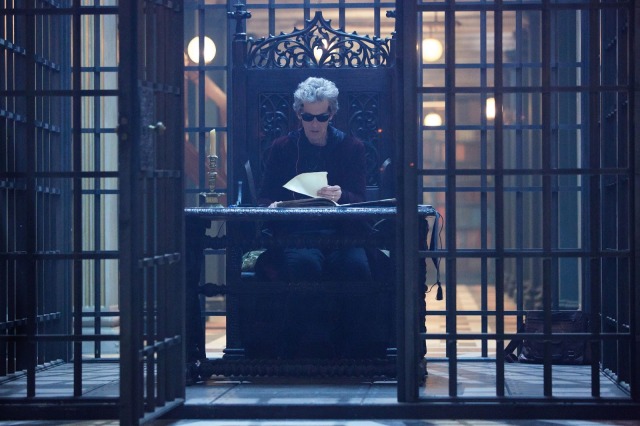
Doctor Who – Extremis – BBC
Extremis, though, was a stand out. The official synopsis was: In the Haereticum – the Vatican’s secret library of blasphemy – there is an ancient book known only as The Veritas. Throughout history, anyone who has ever read it has immediately taken their own life. Now a new translation is online, and the danger is spreading. The Vatican appeals to the Doctor. Will he read The Veritas? But can even the Doctor survive the ultimate truth? And what truth that was. Penned by Steven Moffat, the master of the asynchronous storylines, we have a scenario where reality is nothing but a computer simulation of an advanced alien race, making their war plans in order to find the right time to conquer earth. People that find out the truth about the reality of their existence find the only way out possible: by taking their own lives. The episode was only the introduction of a three-part story that is going to be a fan-favorite for years.
Even though the episode itself is brilliant and there so many things that one could focus on, I decided to write about the core premise of the episode: that is the life in a computer simulation and what that implies about the status of the people inside this simulation. Firstly, it is important to take a look at the reality of this idea. Are we living in a computer simulation? This is a question posed by Nick Bostrom (as well as other philosophers and scientists). In one of his articles his proposes that one the following statements have to be true: “[t]his paper argues that at least one of the following propositions is true: (1) the human species is very likely to go extinct before reaching a “posthuman” stage; (2) any posthuman civilization is extremely unlikely to run a significant number of simulations of their evolutionary history (or variations thereof); (3) we are almost certainly living in a computer simulation,” (Nick Bostrom, “Are You Living in a Computer Simulation,” in Philosophical Quarterly, Vol. 53, No. 211 (2003): 243‐255). The Simulation Hypothesis has been around for years and, as Bostrom noted, the core idea is that reality is nothing but a mere simulation that is so convincing that even the people that experience it cannot tell the difference between actuality and simulation.
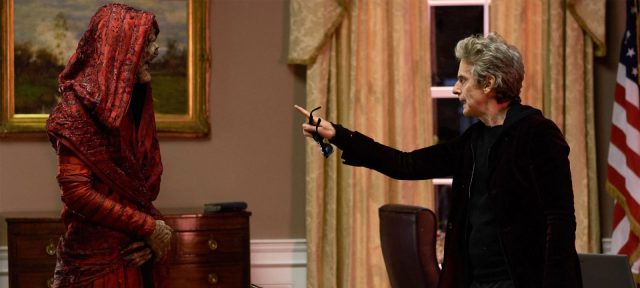
Doctor Who – Extremis – BBC
One of the main issues that arise from a simulated reality is the fact that we might end up with an infinite amount of simulated realities (simulation in a simulation). As long as people do not realise that they are living in a computer simulation, they could end up at the same place as their predecessors of sorts, that is wanting to create the simulation for various reasons (for example to study the trajectory of their evolutionary process or even just for entertainment reasons – most of us are probably familiar with the PC game The Sims, where we could simulate everyday life and activities by controlling our Sim[s]).
I find that it would be interesting to also raise the unavoidable determinism of the simulation hypothesis and how that affects the people living inside it. It seems almost impossible for us to fathom a scenario where every single aspect of our existence is predetermined by a computer programme. Living in a simulated world resembles the various deterministic philosophical and scientific theories. The deterministic aspect of the simulated world stem from the fact that some kind of a super-intelligent AI or a posthuman being created and facilitated the conditions of its existence down to the very last detail. This is an absolute kind of determinism that seems even more tangible than some form of a naturalistic determinism.
What would happen, though, if/when people realised the most well-kept secret in the world is the fact that their very life was just a simulation? Every feeling, every thought, you, the people you love, your life’s work everything is nothing more than just a simulation that someone else runs. And you have no way to access the true information about your existence. Having the experience of creating avatars, sims, or personas online and how quickly one could make them disappear, amplifies the fear of a simulated life. While post-modernism have often pointed out the insignificance of human existence, it is still rather challenging to accept the simulation hypothesis without having to face a real existential crisis.
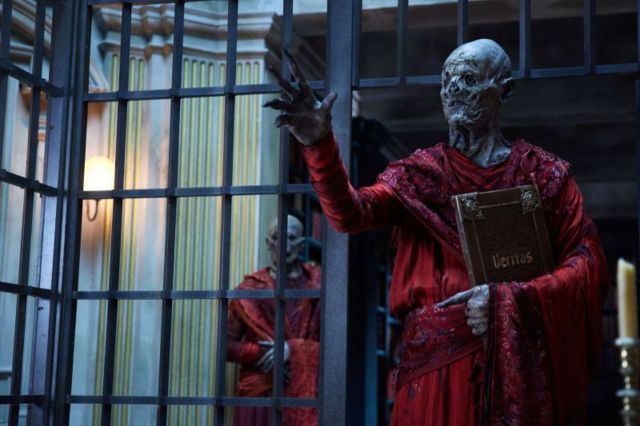
Doctor Who – Extremis – BBC
So, what do you think? Are we living in a computer simulation?
George,
The ComicBook Imperative Guy

It’s been awhile dear readers of The ComicBook Imperative! I hope that you are enjoying the new layout of the blog. And, let me tell you, this is only the beginning! There are more things to come in the not so distant future. But, this a story for another time… (Stay Tuned!)
I would like to inform you about an International Conference on Graphic Novels and Comic Books that will be held at the University of Dundee, Scotland, between 25-29 of June, 2017. It is going to be a thrilling experience and The ComicBook Imperative will be there in order to participate in the Conference and share with you lots of photos and more.
So, if you happen to be in Dundee, come and say hi to me!
George,
The ComicBook Imperative Guy
Information about the 8th International Graphic Novel and Comics Conference:
General Information: http://internationalgraphicnovelandcomicsconference.com/
Programme: http://internationalgraphicnovelandcomicsconference.com/wp-content/uploads/2017/05/BORDERS-CONFERENCESCHEDULE-final.pdf
Registration: http://internationalgraphicnovelandcomicsconference.com/registration/

It has been quite some time dear friends of The ComicBook Imperative! It’s me, your friendly neighbour, the ComicBook Imperative Guy! This time round, I want to share with you a thrilling show, that I only just had the chance to watch properly. That series is Joss Whedon’s Dollhouse, starring Eliza Dushku. Bit late to the party, I guess! But better late than never, right?
I heard about Dollhouse a few years ago, but I did not have to chance to properly watch and appreciate it. But now, having a background in Ethical Philosophy and Bioethics, I would say it was a thrilling TV experience that I cherish. Joss Whedon and Eliza Dushku had previously (and gloriously) worked together during the run of Buffy the Vampire Slayer, where Dushku portrayed Faith, a rogue Vampireslayer against Buffy’s (Sarah Michelle Gellar) proper slayer. Their artistic chemistry translated well and the audience loved Faith so much that she ended up having a season-long arc and pop-up during the series’ finale and the spin-off series, Angel.
Many years later, Joss and Eliza met up again for a new sci-fi project. That project was Dollhouse. For those of you that you are not familiar with the premise of the show, here’s what you need to know: A major (and shady) corporation offers to young, attractive people the chance to put their lives on hold in exchange for help and money. They assign to them various tasks that they have to complete. But things are not as simple as they may seem. In order to do that, they have to erase every single aspect of their mind and character, to become a blank canvas, and then upload a new personality according to the needs of every customer or task. After the completion of the task, their minds are getting erased again until their next assignment. Every contract lasts for five years, after which they are able to leave the Dollhouse and move on with their lives. The story begins with a young woman being forced to sign that contract and become a doll herself. But what happens when the mind seems to be stronger than the technology used? Well, you gotta watch the series in order to find out! (Beware! Spoilers ahead!)
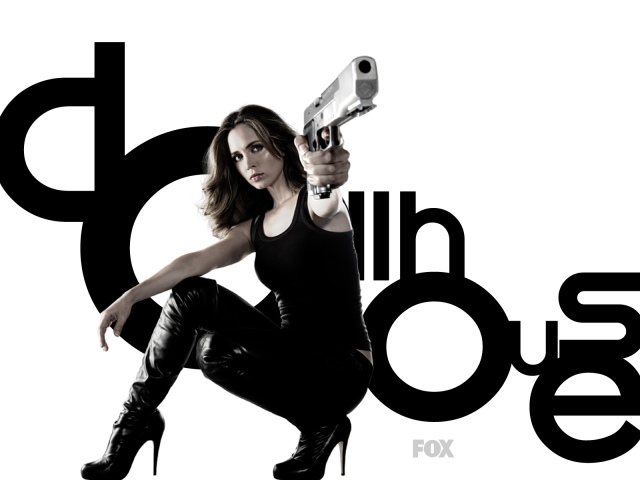
Eliza Dushku as Echo!
So, as you probably understand already, such a premise full of science and fiction was a delight for me. In a previous post, we discussed about the philosophical and scientific movement of Transhumanism and how its core ideas may become an inspiration for certain genres in popular culture. When it comes to Dollhouse there is a wide range of themes and issues that could potentially ignite a very intriguing conversation about emerging and speculative technologies as well as a new prospect of being for humanity. My main focus here is on the issue of mind uploading and the manipulation of mind/body as depicted in the series, the issue of freedom and the emergence of a new kind of technological slavery.
I would like to start with the issue of mind uploading. Mind uploading has been one of the most controversial speculative technologies that have surfaced over the last few years. The basis of this biotechnological operation is that by creating an extremely detailed map of the human brain by scanning it and uploading it in a mega-computer, one can emulate the original brain and create a conscious mind. This is a theoretical technology that could potentially enable a new form of being, a life that is not confined to the human body. Humanity truly then will achieve everlasting life. This is, of course, a highly controversial subject with many philosophers and scientists suggesting that such a brutal operation like this one (we cannot be sure that the original mind/body could possibly survive this process) might end up harming humanity, instead of actually helping anyone. Our existence is closely (and quite possibly irrevocably) tied with our physical body. Our whole experience of being is filtered by our physicality to a certain extent. An operation that suggests such a drastic alteration of the core of our existence is not only endangering our sense of identity (can we be the same after that operation?), but it is also actively risking our physical life. And while this is a speculative technology that seems to create more issues than those it solves, it is interesting to have a closer look in JossWhedon’s version of it.
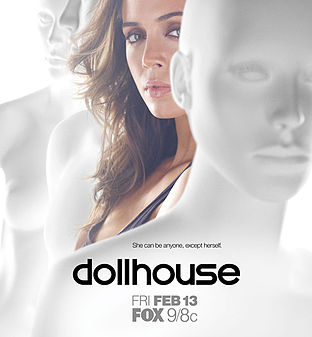
“She can be anyone, except herself.”
In the Whedon-verse, the Dollhouse became possible after the invention of a technology that could have a detailed scan of a human brain and that this scan could be saved in hard drives. After this process, the person tied to the contract is being left in a blank and childlike state, until someone installs an artificially created personality (complete with memories, ideas and feelings) in order to be used for various engagements (sexual encounters, heists, negotiations etc). As I noted before, after the completion of the engagement the mind of the “Active” is being wiped until his/hers next engagement. The series focuses on Echo (Eliza Dushku’s character) that starts to retain certain information and memories from every different personality that she had been installed with over her time in the Dollhouse. Over the series, Echo gradually is becoming self-aware and she is able to use all the different capabilities that she artificially gained in order to set everyone free.
Whedon’s idea behind the “Actives” assuming different roles and personalities for every engagement derived from everyday experience in our cybernetic culture. We are standing behind different avatars in social media that enable us to go back and forth between different personalities. But his idea is also a revolutionary (and rather scary) way of looking at the mind uploading technology that some Transhumanist thinkers suggest that we should endorse. In his world, this technology is being used for all sorts of things and this creates a whole new wave of human enslavement thanks to the biotechnological progress. Provided, that you have enough money, you can rent a person that will not pretend to like what you like and be into what you are into, but will be tailored to fulfil and cater to your every desire. As cruel and deranged as it can be, the “Active” will not have a choice but to obey to whatever the installed personality dictates and once everything is done they will go back to the blank state they were before without remembering not even a thing.
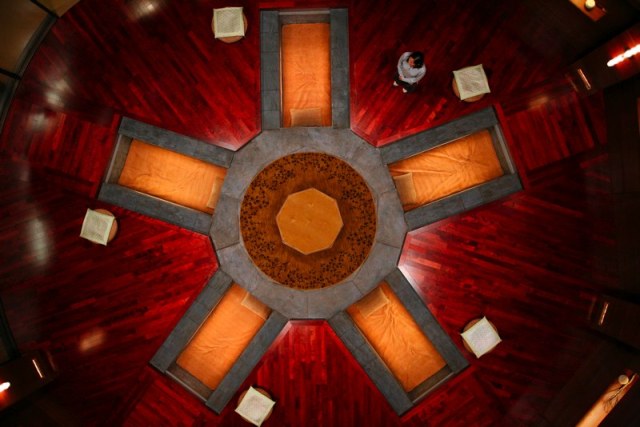
The sleeping chambers of the Dollhouse.
In Whedon’s world the concept of freedom is becoming obscure from the moment people are brought in the different Dollhouses all over the world with promises of providing help in times of distress or financial retribution or even blackmail. Even though they willingly consent and sign the contract, we still have to ask whether this is something ethical and if this was actually a truly free choice. Also, for what things are they responsible during the five years that they are dolls? Being responsible for a certain action implies that you have freely acted. But what does freedom even mean in that world? Echo’s gradual self-awareness is a way of understanding what freedom is in their world and why it is important for her to help the other “Actives” to be free. Whedon boldly showcased that some version of this technology could create a new world, where people can be sold as intricate dolls for other people to play with. This is the ultimate objectification of human kind. A person-no longer being the master of him- or her- self-is manufactured in a way that fulfils someone else’s needs and is destroyed the moment that is no longer needed.
And while this is a rather dark, obviously sensationalist, and sci-fi approach to this kind of biotechnological operation, we still have to consider whether there is any truth to that. Finally, I would like to end this post with one of the most intriguing aspects of Whedon’s story: the fact that Echo (and other characters in minor ways) was able to overcome her conditioning and become self-aware. Apart from the “specialness” of the character, it also shows us that our mind and our body are intertwined in ways that we cannot truly grasp yet and we are not a disconnected body and mind, as Descartes and others suggested in the past. So, before rushing to scan our brains and start living as computers, we need to research and understand the complicate relationship between our minds and our bodies.
I would love to read your thoughts on this subject!
George,
The ComicBook Imperative Guy

Hello from you friendly neighbour, The ComicBook Imperative Guy! For quite some time now I have been thinking of Batman’s choice to not kill the Joker, and their overall relationship as well. Batman is truly a landmark in popular culture. He is one of the most recognisable superheroes for more than 70 years and his adventures have been the subject of countless TV series adaptations, movies, books, and of course the source material itself, comicbooks. Batman is an iconic figure, hence the vast numbers of merchandise and products devoted to the Dark Knight himself. Whenever there is an iconic superhero though, there is bound be an iconic villain as well. The Joker is a chilling literate figure that haunts Batman. No other villain has ever reached the level of darkness and insanity that characterizes the Joker. He is arguably DC’s most emblematic villain.
The Joker is not a mere flamboyant villain that wants to conquer the world. The Joker’s motives are shrouded in darkness and more often than not his plans do not aim towards something grand, but they are born out of cruelty and a fetish to push people to their limits. Other villains desire to conquer the cosmos or destroy the multiverse or gather more power, but the Joker is always grounded in this world. He does not desire all that. And this is why he is so much more terrifying. A villain that gathers an army in order to conquer (or destroy) the world is something that cannot really resonate in the same way that the Joker’s darkness has resonated with readers all over the world. The Joker is a symbol of a dark, twisted mind and psyche. This is one of the reasons why the Joker is such a prominent figure in the entire DC universe and the really good Joker-related stories are classics (i.e., The Killing Joke).
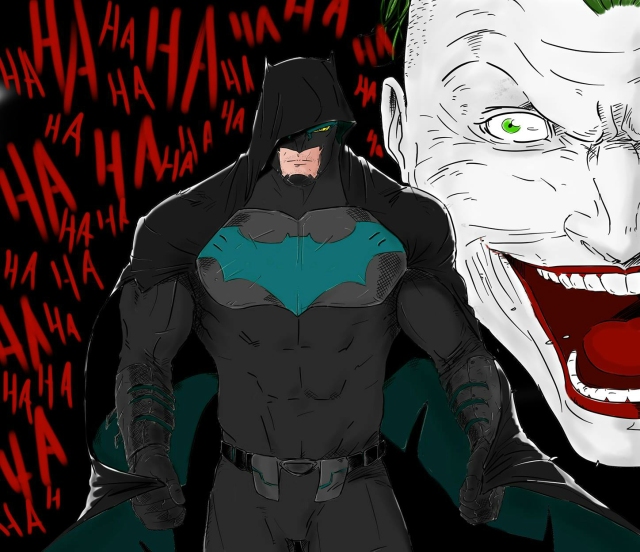
Batman Haunted by the Joker. Paulos Kiziridis, 2016.
One of the main aspects of Bruce Wayne’s journey as the Batman is his decision to never take someone’s life. This is a constant in every version of Batman. Some of you devoted Batman readers might argue that he has killed in the past, but I think that is a part of certain storylines and do not define his overall presence and narrative. Batman has actively decided to never kill anyone, but should he ever kill the Joker? The Joker has killed countless of people in his different incarnations over the years and he will continue to do it, even if he is losing to Batman. His actions have led to a universe where the most iconic heroes have turned villains (i.e., the amazing Injustice: Gods Among Us). Batman seems to have justified reasons why he should kill the Joker. But he never does. At this point I think I have to set and important disclaimer: we obviously know that the Joker cannot die, since he is pretty much as important to the story as Batman himself. His every appearance is an event. So, this is not really my concern with this post. What I want to discuss is under what premises Batman’s choice is a good or a bad one.
The reasons why Batman should kill the Joker are obvious, but is that an ethical choice? Should Batman kill the Joker even if that goes against his moral worldview? Should Batman just stand by while the Joker is killing innocent people and spreading chaos, because he simply cannot bring himself to the point of taking one life in order to save countless others? These are really important questions both for the Bat-universe and our world. These are some of the oldest questions ever posed in Moral Philosophy and the discussions are ongoing ever since. What I seek to do here is to present broadly how we could justify morally either decision; killing or not the Joker.
First, I would like to start with the moral path that justifies Batman’s choice to not take the Joker’s life. It is with Immanuel Kant’s concept of the Categorical Imperative that we can accept Batman’s decision to let the Joker live. One of the most characteristic and intrinsic aspects of Kant’s Moral Philosophy is the notion of the Categorical Imperative. According to Stanford’s Encyclopedia of Philosophy: “Immanuel Kant (1724–1804) argued that the supreme principle of morality is a standard of rationality that he dubbed the ‘Categorical Imperative’ (CI). Kant characterises the CI as an objective, rationally necessary and unconditional principle that we must always follow despite any natural desires or inclinations we may have to the contrary. All specific moral requirements, according to Kant, are justified by this principle, which means that all immoral actions are irrational because they violate the CI.” Kant’s definition of the Categorical Imperative explicitly dictates that we should: “Act only according to that maxim whereby you can, at the same time, will that it should become a universal law.” (Kant, Immanuel (1993) [1785]. Grounding for the Metaphysics of Morals. Translated by Ellington, James W. (3rd ed.). Hackett. p. 30.) Batman is first and foremost a masked crime fighter. His drive is to make Gotham a safer place; a place where children will not be afraid that they will lose their parents the same way he did. So, no matter what his instincts or his brains urge him to do, and that is probably to take the Joker’s life, his rational mind cannot accept this maxim, since it cannot become a universal law. Batman, as a crime fighter, could not accept a universal law that would dictate individuals to take someone’s life for any reason whatsoever. More than that, human life has value and this value can never be disregarded, even if the life we are talking about is the Joker’s. The moment Batman would disregard this inherent and intrinsic value by killing the Joker, he would not be any better than him. Batman could never will that his maxim should be a universal law. The mere fact that he has taken a life (any life) would characterize his action as irrational and immoral (even if this action ended up being good for the general public). But not all ethical theories would stand by this rule. As a matter of fact, Immanuel Kant’s greatest philosophical “arch nemesis” was—the rather interesting—John Stuart Mill.
John Stuart Mill is one of the prominent figures in philosophy. He, along with his predecessor J. Bentham, formulated the rather popular theory of Utilitarianism. There are many different aspects in the Utilitarian moral theory, and this is why I am going to broadly reference the most important principle without getting into too much detail, since this is not really the place for it. Utilitarianism—in his most basic form—dictates that the moral status of an action is determined by the good/pleasure it produces for the greatest number of people. Simply put, our actions are good so long as they offer the greatest pleasure for the greatest number of people (or, at the very least, do not harm anyone). As we can observe, where Kant puts forth a normative rule that should guide our maxims for acting in certain ways in the form of the Categorical Imperative, Utilitarianism is following a different route judging our actions only by their outcome. It’s purely consequential. Under the Utilitarian point of view, Batman should kill the Joker not out of vengeance, but because his action would end up benefiting the greatest number of people. The Joker’s life would be taken in order to protect the millions of people that could end up in his way or in the middle of his evil plans. Batman’s decision would not only be justified, but more than that it would be considered a right and moral action. The benefit of going forward with killing the Joker, a renowned and insane criminal, is far greater than letting him live and continue putting in danger both Gotham and the world.
By no means this really broad overview of these two different moral philosophies are exhausted and you could definitely argue that there is more to them and different approaches could be made. I only want to create a framework in which we could see that Batman’s choice (either killing or not the Joker) could be considered acceptable or even moral.
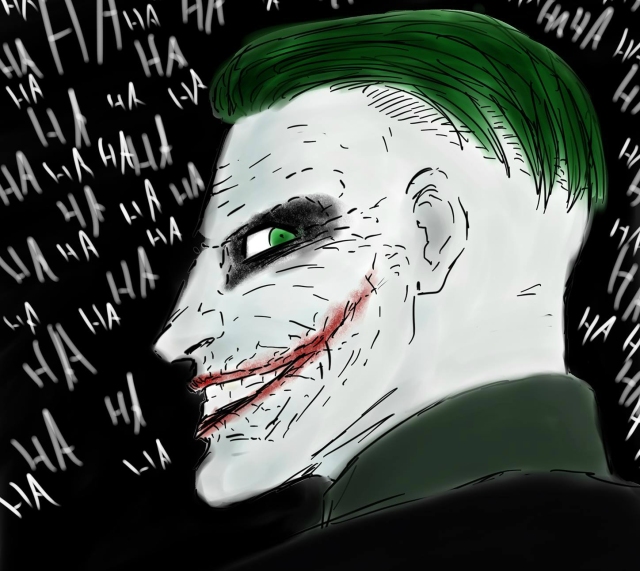
The Joker. Paulos Kiziridis, 2015.
Lastly, in my opinion, I think that Batman’s choice to not kill the Joker is the right one. Immanuel Kant’s Categorical Imperative seems more appropriate in order to understand the complexity of this decision and more than that, the complexity of Moral Judgements. This is not one simple task and even though Utilitarianism certainly offers an efficient solution against a public menace, we have to wonder about both the moral agent’s status after such a horrific action and the place where our society would be afterwards. The notion that we must want our maxims to become a universal law offers a greater guiding light for our actions than just the outcome of them. And every “Batman,” as someone who at their very heart want to protect the world and fight crime, could never wish this maxim to become a universal law.
I would love to read your thoughts on this subject! Should Batman kill the Joker? Comment and let’s have a great discussion!
George,
The ComicBook Imperative Guy
Take a look at the amazing Batman v Joker art kindly offered by the amazing artist, Paulos Kiziridis! Check out his Facebook page, here: The Art of Paulos Kiziridis and his ArtStation page, here: Paulos Kiziridis.
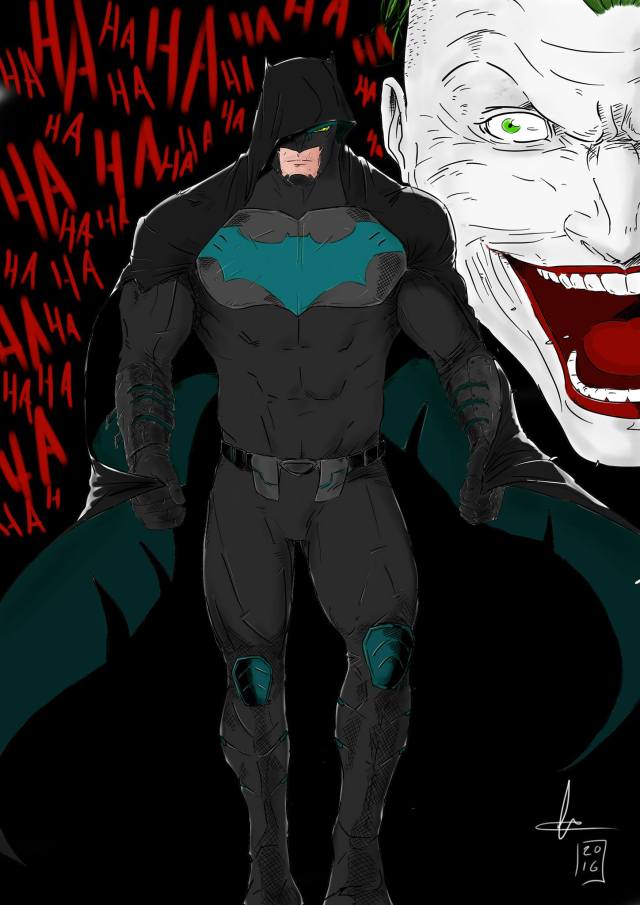
Batman Haunted by the Joker. Paulos Kiziridis, 2016.
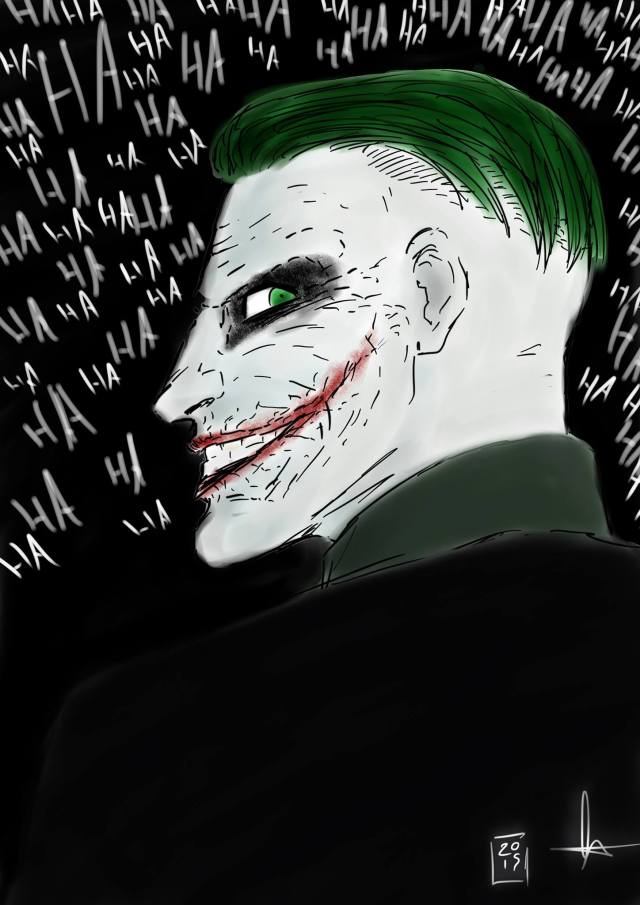
The Joker. Paulos Kiziridis, 2015.
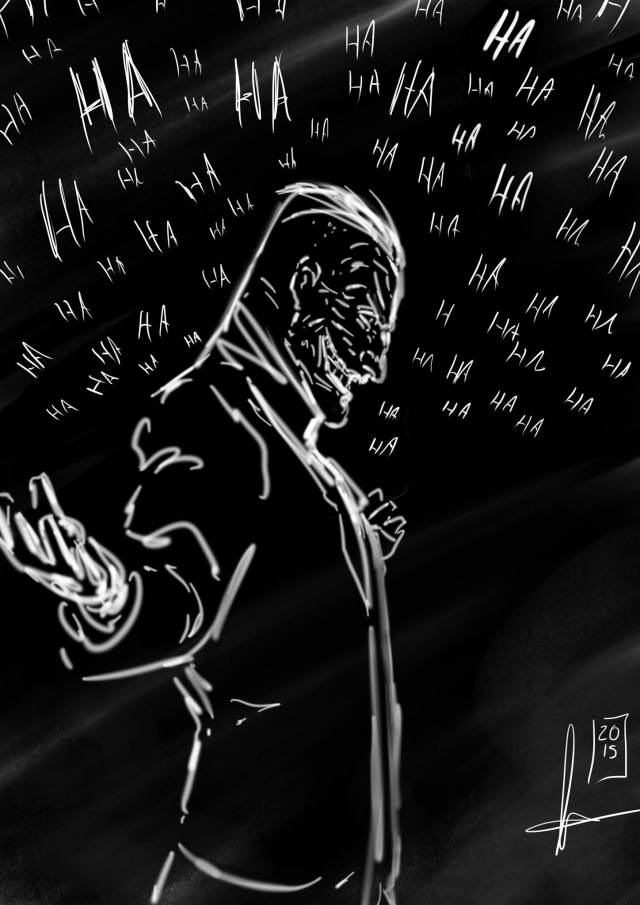
The Joker. Paulos Kiziridis, 2015.
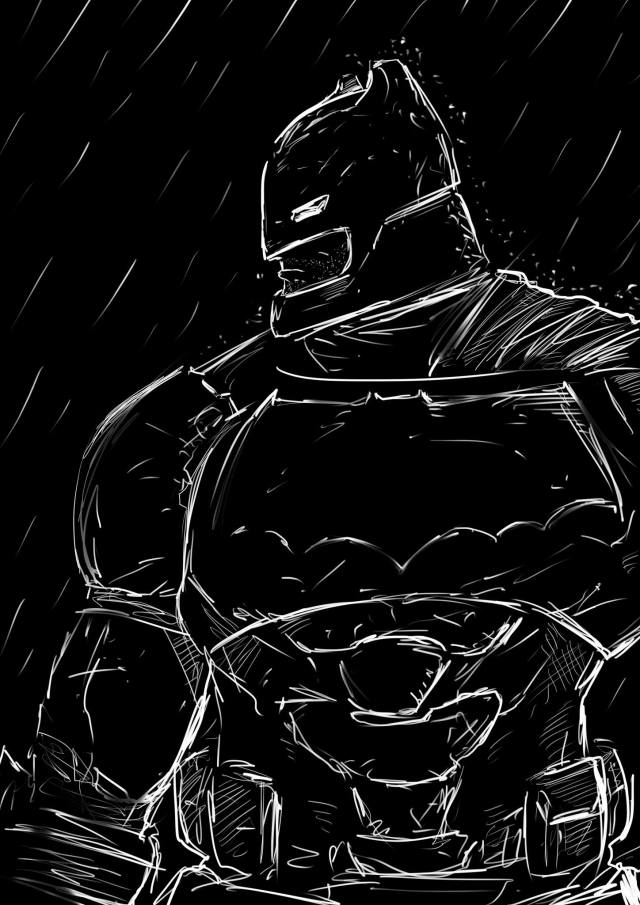
Batman. Paulos Kiziridis.
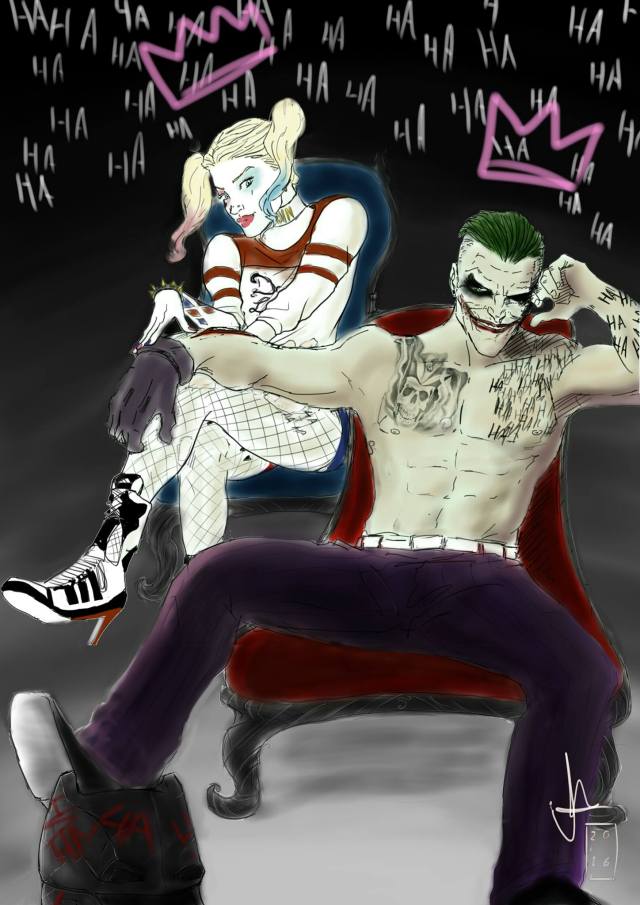
The Joker and Harley Quinn. Paulos Kiziridis, 2016.
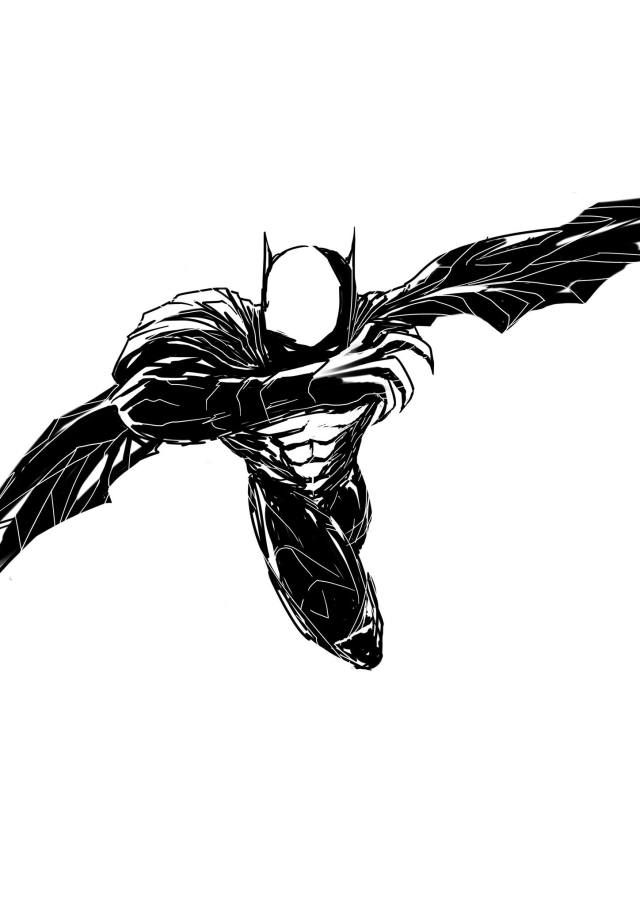
The Dark Knight. Paulos Kiziridis.


You must be logged in to post a comment.